
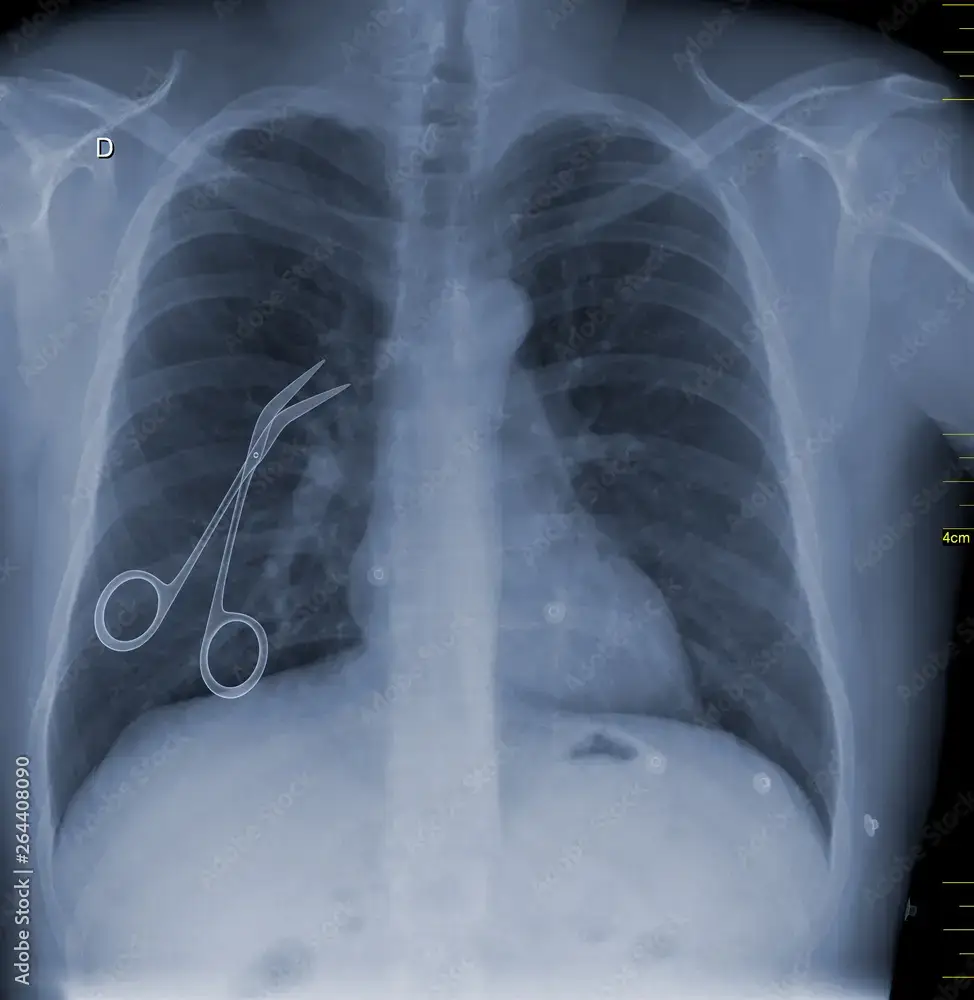
Medical errors are among the leading causes of death in our country. At the request of insurance companies, the Georgia legislature has made medical malpractice cases extremely difficult to win.
These claims require expert testimony, carry shorter deadlines than other injury cases, and cannot even be filed without a qualified expert's affidavit. We will tell you honestly whether you have one.
Do You Have a Georgia Medical Malpractice Case?
Malpractice requires more than a bad result. It requires a departure from what a reasonable provider would have done, and proof that the departure caused your harm. Work through these five questions:
If you believe a medical error harmed you, request your complete medical records now. Do not tell the provider you are considering a claim first.
Call (678) 935-6000How Georgia Medical Malpractice Law Works
These cases require expert testimony that the doctor, nurse, or hospital violated the standard of care, and the rules change depending on where the care happened.
What a reasonable provider would have done facing the same circumstances. In a doctor's office, you must prove a reasonable doctor would not have made the error or would have made the correct diagnosis. Misdiagnosis cases are the hardest to win.
Georgia judges ER care by a gross negligence standard under O.C.G.A. § 51-1-29.5, meaning a lack of all care for the patient's safety. Outside the emergency department, the ordinary standard applies, so where in the building the error happened can change the entire case.
O.C.G.A. § 9-11-9.1 requires an affidavit from a qualified expert to be filed with the complaint. A malpractice suit filed without one can be dismissed outright.
Two errors are almost always malpractice. A surgeon leaving a sponge or instrument inside a patient should never happen, because staff are required to count every instrument before the wound is closed. And operating on the wrong side of the body, such as the left knee instead of the right, is nearly always a violation of the standard of care.
Who Actually Pays a Medical Malpractice Claim
A malpractice insurance policy, but which one depends on an employment detail most patients never think about.
| Provider | Who is responsible |
|---|---|
| A hospital-employed physician or nurse | The hospital, through its own coverage |
| A physician with privileges but not employed | The doctor's individual malpractice policy. The hospital often is not liable for their care. |
| A private practice | The practice group's policy and the individual physician's |
| A surgical center or imaging facility | The facility's own policy |
| A public hospital or county facility | May involve government immunity and much shorter notice requirements |
Many physicians who practice at a hospital are not employed by it. Establishing that early determines who can be held responsible and how much coverage exists.
What Drives the Value of a Malpractice Claim
In malpractice, proving causation drives value more than the error itself.
The Evidence That Decides a Malpractice Case, and the Deadlines
In a malpractice case, the records are the case, and the deadlines are the trap.
| Evidence | What it proves | How long you have |
|---|---|---|
| Your complete medical records | The entire case is built from them | Request them before you signal a claim. Some providers alter records once they learn a claim may be coming. |
| Imaging and pathology | Often shows what was missed, and when | Request the actual images, not just the reports |
| A second opinion | What treatment is now required, and evidence of the error | Schedule early. It also protects your health. |
| Incident and variance reports | The facility's own internal record of the event | Obtained in discovery |
| Nursing notes and medication records | A timeline of what was observed and given | Part of the complete record |
| A qualified expert review | Required before the case can be filed | Takes weeks to months. Build it into your timeline. |
Three separate clocks apply. Most claims must be filed within two years of the injury or death under O.C.G.A. § 9-3-71. A five-year statute of repose can bar a claim even before the patient discovers the error. A claim for a foreign object left in the body generally runs one year from discovery under O.C.G.A. § 9-3-72.
"An experienced medical malpractice lawyer will give you an honest opinion on your chances of bringing a successful case. That is what we owe every patient who calls."
R. Michael Coker
What the Hospital's Lawyers Will Argue
Malpractice defense lawyers are experienced and well funded, and they settle less readily than auto insurers. Expect these:
The most effective defense in medicine. Every procedure carries risk, and a disclosed complication generally is not malpractice.
Consent covers known risks of a properly performed procedure. It does not authorize a departure from the standard of care.
A causation attack rather than a standard-of-care attack, and the argument that defeats the most otherwise-viable cases.
Invoking the gross negligence standard, which defeats many claims that would succeed in any other setting.
A direct challenge to the affidavit, aimed at ending the case before the merits are ever reached.
A bad outcome is not the same as malpractice. You deserve a straight answer early rather than two years of hope, which is why we turn down more malpractice cases than we take.
How a Malpractice Case Proceeds
Consider a second opinion. Another doctor's view of the treatment you now need helps prove the malpractice occurred, establishes which medical bills should be recovered, and protects your health.
Our compassionate and professional approach gives clients peace of mind that their case is being handled by attorneys who understand complex medical matters.
Coker Accident Lawyers represents patients and families across Gwinnett County and Barrow County, from offices in Lawrenceville, Mulberry, and Winder. Related: wrongful death and Georgia personal injury claims.