
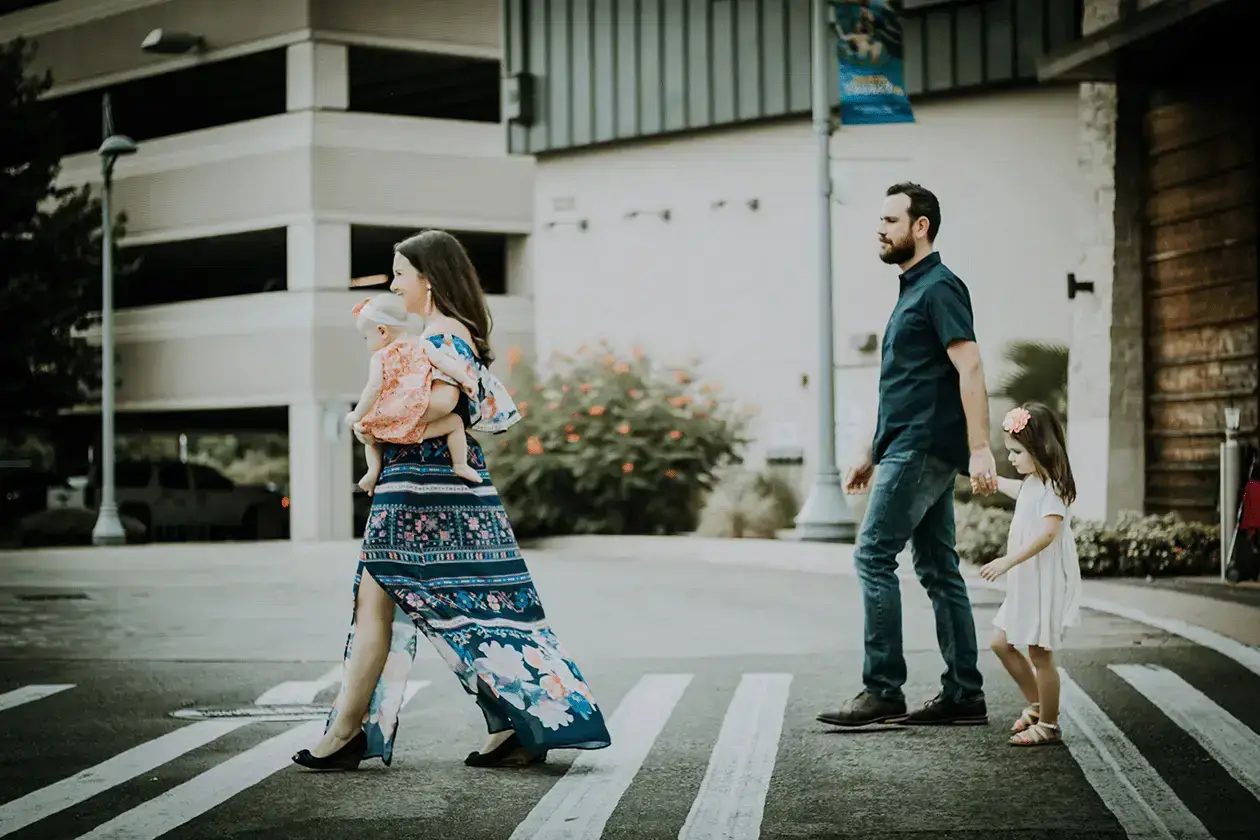
In Georgia, pedestrians almost always have the right of way in a crosswalk, especially when obeying a WALK signal. Cases get more complicated when a pedestrian is not in a crosswalk or is not crossing with the light, but even then you still have rights.
The difference between winning and losing a pedestrian case is often two or three feet of pavement that nobody documented.
Do You Have a Georgia Pedestrian Accident Case?
You have a claim when a driver failed to use due care and struck you, whether or not you were in a crosswalk. Work through these five questions:
If a vehicle struck you while you were on foot, call. Where exactly you were standing is something we investigate, not something you need to resolve first.
Call (678) 935-6000How Liability Works in a Pedestrian Case
Georgia protects pedestrians in different ways depending on where they were, and every driver owes a duty of care regardless.
Georgia law requires drivers to yield to pedestrians lawfully within a crosswalk under O.C.G.A. § 40-6-91. The strongest protections apply here, particularly when you were crossing with a WALK signal.
Under O.C.G.A. § 40-6-92, pedestrians outside a crosswalk must yield to vehicles. You can still recover once you have established yourself in the roadway and the driver should have seen you and avoided the collision.
O.C.G.A. § 40-6-93 requires every driver to exercise due care to avoid any pedestrian. A driver does not get to hit someone simply because that person was not in a crosswalk.
This is why the exact point of impact decides so many cases. Moving it even two or three feet can place a pedestrian outside the crosswalk and cost them the case, which is why the scene has to be documented before anything is cleaned up.
Who Actually Pays a Pedestrian Accident Claim
The driver's liability insurance first, and then, in a detail that surprises most people, quite possibly your own auto policy, even though you were walking.
| Source | When it applies |
|---|---|
| The driver's liability policy | The primary source. Georgia's minimum is $25,000 per person, often far less than a pedestrian injury costs. |
| Your uninsured/underinsured motorist coverage | Covers you as a pedestrian, including hit-and-run cases. A household policy may apply even though you were not in a car. |
| Your medical payments coverage | Early treatment, regardless of fault |
| A commercial or rideshare policy | Where the driver was working or logged into an app |
| A government entity | Where a malfunctioning signal or defective crossing contributed, with written notice required far sooner than two years |
Pedestrian injuries routinely exceed the driver's limits, so identifying every applicable policy early matters.
What Drives the Value of a Pedestrian Claim
A person on foot has no protection at all, so these cases tend to involve the most serious injuries we handle.
The Evidence That Decides a Pedestrian Case, and How Fast It Goes
We need to investigate the scene as soon as possible. Our incident response team can document the exact point of impact before that evidence is destroyed, intentionally or otherwise.
| Evidence | What it proves | How long you have |
|---|---|---|
| Exact point of impact | Whether you were in the crosswalk, the fact the whole case turns on | Hours. Debris and fluid are cleared the same day. |
| Tire marks and vehicle debris | Speed, braking, and where both parties actually were | Hours to days, less in rain |
| The vehicle's black box | The driver's exact speed at impact | Lost when the car is repaired or salvaged |
| DOT signal timing records | That the lights and WALK signals were working and should have been seen | Requires a request to city, county, or state DOT |
| Business surveillance footage | The collision and the approach | Often overwritten in 7 to 30 days |
| The driver's phone records | Distraction at the moment of impact | Requires a subpoena before the carrier purges them |
| Your clothing and belongings | Visibility, which the defense will attack | Preserve them. Do not wash or discard them. |
We know how to collect data from the vehicle's black box recorder, and we have connections at the city, county, and state departments of transportation who can provide light sequencing information for any signal in the area.
"Moving the location of impact even two or three feet can put a pedestrian outside the crosswalk and cost them their case. That is why we document the scene immediately."
R. Michael Coker
What the Driver's Insurance Company Will Argue
In pedestrian cases, the number one defense is to blame the victim. We have seen all the arguments, and we know how to counter them:
Crossing outside a crosswalk affects your percentage of fault, not your right to recover. The driver still owed you due care.
The pedestrian version of "he came out of nowhere," and usually an admission the driver was not watching. Point-of-impact evidence and sight lines answer it.
Raised in nearly every nighttime case. It is a visibility argument, not a permission slip, and it is weakened by streetlight evidence and the driver's own headlight range.
The driver's phone records are discoverable too, and distracted drivers cause far more of these collisions than distracted pedestrians do.
Used to shift fault even where it had nothing to do with the collision. It matters only if it actually contributed.
Insurance companies can tell which lawyers are serious threats and which firms will send a single letter with no real investigation. If no investigation happens early, firing that firm later may be too late.
How a Pedestrian Case Proceeds
If you are able, start the evidence yourself. Photograph the point of impact, the crosswalk, and the intersection. Ask nearby businesses whether their cameras captured the collision, and record the footage from their screen with your phone before it is overwritten.
Most pedestrian accident lawyers are not willing to spend what it takes to investigate, photograph, and retain critical evidence. We spare no expense in our pursuit of justice for you.
Coker Accident Lawyers represents pedestrian accident victims across Gwinnett County and Barrow County, from offices in Lawrenceville, Mulberry, and Winder. Related: car accidents, wrongful death, and Georgia personal injury claims.